Brand Mascots: The History of Famous Characters From Bibendum to Duo
Brand mascots outlive the executives who approve them. A tyre man drawn in 1898 still sells tyres, a peanut in a top hat was declared dead in 2020 and returned as a baby, and an owl was run over by a truck in 2025 to sell language lessons. Here is how these characters began and changed.
Why brand mascots exist
A mascot solves a simple problem. Most products look alike on a shelf, and a face is easier to remember than a formula. Brand mascots give a box of cereal or a can of nuts a personality, a voice and a set of habits that can appear in print, on television and, now, in a social feed every single day.
They also come with an advantage over real people. A mascot does not ask for a raise, does not age unless asked and rarely gets arrested. That reliability explains why so many famous characters are older than the companies that now own them. It also explains why changing one, as the examples below show, can turn into public news.
The history of brand mascots before television
The earliest characters were trademarks first. On September 4, 1877, Henry Seymour of the Quaker Mill Company filed a figure in Quaker dress in Ravenna, Ohio, the first trademark for a breakfast cereal. The man held a scroll reading pure. He was redrawn in 1946 and again in the 1950s, and simplified to a single-colour portrait in 1972.
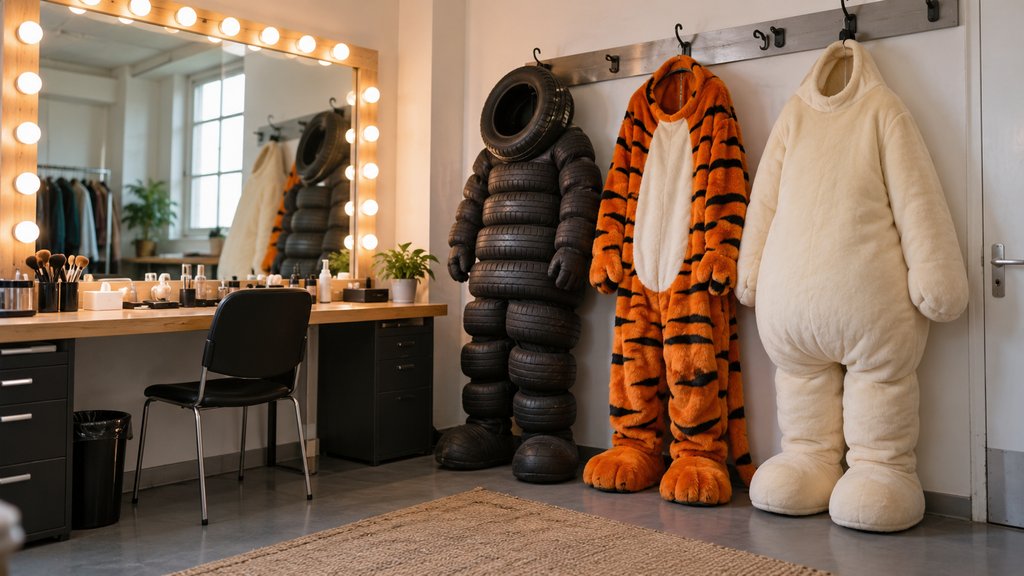
Michelin’s Bibendum came from a stack of tyres. At an exhibition in Lyon in 1894, Édouard Michelin saw a pile of them that looked like a man without arms. The cartoonist known as O’Galop drew the figure for an 1898 poster titled Nunc est bibendum, Latin for now is the time to drink, with the tyre swallowing road obstacles.
Planters found its character through a schoolboy. In 1916, Antonio Gentile of Suffolk, Virginia, sent the company a drawing of a peanut with arms and legs and reportedly received $5. A commercial artist added the monocle and top hat. In 1928, the Minnesota Valley Canning Company introduced a giant to sell its peas, later known as the Jolly Green Giant.
Famous brand mascots of the television age
Television gave mascots movement and a voice. Kellogg’s Tony the Tiger beat three rival characters, including Katy the Kangaroo and Newt the Gnu, in a 1952 popularity contest on boxes of Sugar Frosted Flakes. His growl of They’re Gr-r-reat! was voiced for about five decades by the bass singer Thurl Ravenscroft.
Ronald McDonald appeared in 1963 in Washington, D.C., first played by the local television personality Willard Scott. Pillsbury’s Doughboy, officially Poppin’ Fresh, arrived in commercials in November 1965 as a stop-motion figure who giggled when poked in the stomach. Today’s versions of both use computer animation, but the basic shapes have barely changed.
The Energizer Bunny, on American television from the late 1980s, began as a parody. Duracell had run a drumming bunny since 1973 but let its United States trademark lapse, so Energizer interrupted a copy of that ad with its own sunglassed rabbit. The two rabbits still split the world map, a curious footnote in the history of brand mascots.
Famous mascots that had to change
Some characters aged badly because they were built on stereotypes. PepsiCo announced in June 2020 that it would retire Aunt Jemima, saying the character’s origins were based on a racial stereotype, and on February 9, 2021, it revealed the new name, Pearl Milling Company. The brand had used versions of the image for more than a century.
Other changes are about tone. In January 2023, after months of criticism from television commentators about small changes to their shoes and outfits, M&M’s announced an indefinite pause from its spokescandies and named Maya Rudolph as spokesperson. The pause turned out to be a storyline. The characters returned in the brand’s Super Bowl commercial a few weeks later.
Killing the mascot as a campaign
Planters announced on January 22, 2020, that Mr. Peanut had died at 104, sacrificing himself to save friends in a car crash. Its Super Bowl spot showed his funeral, where a Baby Nut sprouted from the soil. The adult peanut eventually returned. The stunt was widely mocked, but people talked about a nut brand for weeks.
Duolingo repeated the idea in February 2025, with sharper results. Its green owl, Duo, was reported dead after a collision with a Tesla Cybertruck, and users were told they could bring him back by earning 50 billion experience points in lessons. They did so within about a week, and Duo returned in late February, climbing out of a coffin.
Famous brand mascots at Super Bowl LX in 2026
Previews before Super Bowl LX, on February 8, 2026, noted a lighter mascot lineup than usual, with the M&M’s characters and Mr. Peanut sitting the game out. Budweiser’s Clydesdales still appeared, in American Icons, which topped the USA Today Ad Meter. Pepsi’s spot nodded to Coca-Cola’s polar bears, a rival’s mascot used as a punchline.
Old characters still draw crowds. The year before, at Super Bowl LIX in 2025, Instacart ran a spot crowded with legacy mascots including Chester Cheetah and the Kool-Aid Man. The logic is plain: an existing character carries decades of memory into a thirty-second slot. The wider story of those broadcasts sits in the history of Super Bowl commercials.
What keeps a mascot alive
The mascots that survive share a few traits. Their shapes are simple enough for a child to draw, they have one clear habit, such as a giggle, a growl or a monocle, and they change slowly. Bibendum lost his cigar and pince-nez over the decades, but the stack of white rings never went anywhere.
Shape matters here as it does in logo history: the survivors are simple enough for a child to draw. Slogans travel with mascots, too, from Tony’s growl to the Doughboy’s giggle, and the guide to famous slogans picks up those lines. The open question for 2026 is whether a character can survive an AI-generated version of itself.
Questions about brand mascots
What is a brand mascot?
A brand mascot is a character, human, animal or invented, that represents a company or product in its advertising and packaging. Unlike a celebrity endorser, the mascot belongs to the brand, never ages unless the brand wants it to and cannot cause a scandal of its own. Examples include Bibendum, Tony the Tiger and the Pillsbury Doughboy.
What is the oldest brand mascot?
The Quaker figure is among the oldest still in use. Henry Seymour filed it as a trademark in Ravenna, Ohio, on September 4, 1877, and it was the first trademark for a breakfast cereal. Michelin's Bibendum followed in 1898 and is often called the oldest mascot drawn as a full cartoon character.
Why are brand mascots making a comeback?
Social media rewards characters that can post, reply and joke in a consistent voice, and a mascot can do that daily without a celebrity contract. Duolingo's owl showed in February 2025 how much attention a character can draw online. Brands also reuse older mascots because nostalgia tests well with audiences in their thirties and forties.
What are some famous brand mascot examples?
Well-known examples include Michelin's Bibendum from 1898, Planters' Mr. Peanut from 1916, the Jolly Green Giant from 1928, Kellogg's Tony the Tiger from 1952, Ronald McDonald from 1963, the Pillsbury Doughboy from 1965, the Energizer Bunny from the late 1980s, the GEICO gecko from 2000 and Duolingo's green owl, Duo, from the 2010s.
Why did Planters kill Mr. Peanut?
It was a publicity stunt before the Super Bowl. On January 22, 2020, Planters announced that Mr. Peanut had died at the age of 104 while saving his friends. The game-day commercial then showed a funeral, where a Baby Nut sprouted from the grave. The adult character later returned to the brand's advertising.