Guerrilla Marketing Examples: Famous, Creative and Cautionary Stunts
Guerrilla marketing examples range from a vending machine that handed out pizza to a statue that stared down a bronze bull. This page collects the famous ones with dates and brands, explains what made each work, and includes one stunt in Boston that shut down bridges and cost its owner two million dollars.
Where the term came from
Jay Conrad Levinson published Guerrilla Marketing in 1984, aiming it at small businesses that could not afford television. His argument was simple: spend imagination, time and energy instead of money. Big brands later borrowed the label for anything unexpected in public space. Most guerrilla marketing examples people share today come from companies with plenty of cash.
The common thread is surprise in a place nobody associates with advertising. A pavement, a statue, a vending machine or a train carriage becomes the medium. The stunt itself may reach a few thousand people. The photos, videos and news stories are what carry it further, which is why the best ones are designed to be filmed from the start.
Famous guerrilla marketing examples, 1999 to 2012
The Blair Witch Project in 1999 is an early landmark. Its makers ran a website presenting the film’s three missing student filmmakers as real, with police reports and interviews. Plenty of viewers walked into cinemas unsure whether the footage was staged. The low-budget film became one of the most profitable releases of its decade.
Coca-Cola’s “Happiness Machine” in 2010 went the other way, using warmth instead of fear. A vending machine at St. John’s University in New York handed students extra bottles, flowers, a pizza and even a long sandwich. Hidden cameras recorded the reactions. The resulting video spread online for months and set the template for countless hidden-camera brand films.
Red Bull Stratos, on October 14, 2012, may be the largest stunt ever filed under the label. Austrian skydiver Felix Baumgartner jumped from a balloon capsule in the stratosphere above New Mexico and broke the sound barrier in free fall. Millions watched the live stream on YouTube. The drink appeared only on the capsule and his suit.
When a creative stunt goes wrong
On January 31, 2007, Boston police found battery-powered light boards with dangling wires under bridges and in subway stations. They showed a cartoon character from Aqua Teen Hunger Force, promoting a coming film. The city closed roads and called in bomb squads. Turner Broadcasting later paid $2 million in a settlement, and the network’s general manager resigned.
The lesson has been repeated in every marketing class since. A creative idea that looks harmless in a meeting can look alarming at night on a bridge. Anything with wires, unattended packages or official-looking signage is a risk. Legal permits matter too: a chalk stencil on a pavement can still bring a fine from the city.
Creative guerrilla marketing in public space
Fearless Girl appeared on March 7, 2017. The bronze statue of a small girl, hands on hips, faced Wall Street’s Charging Bull in Lower Manhattan. State Street Global Advisors placed it to promote a call for more women on corporate boards. It drew crowds and photographers immediately and later moved to a spot facing the New York Stock Exchange.
Public art carries a risk the Boston boards did not: real affection. The sculptor of the Charging Bull objected that the new statue changed the meaning of his work. That argument, about whether a brand may borrow a public landmark, has never been settled. It returns each time a company dresses a statue or wraps a bridge.
A Canadian example at the luggage carousel
In December 2013 WestJet set up a screen with a virtual Santa at departure gates in Toronto and Hamilton. Passengers bound for Calgary scanned their boarding passes and told Santa what they wanted. While they flew, staff in Calgary bought the gifts. The presents arrived wrapped on the baggage carousel, with each passenger’s name on the tag.
The finished video drew tens of millions of views online. Part of its charm was the Canadian setting: winter coats, a crowded arrival hall, an airline crew in Santa hats. More Canadian ads of this kind are collected on the Canadian commercials page. It remains one of the most shared airline videos ever posted.
Faux out-of-home: the newest guerrilla marketing examples
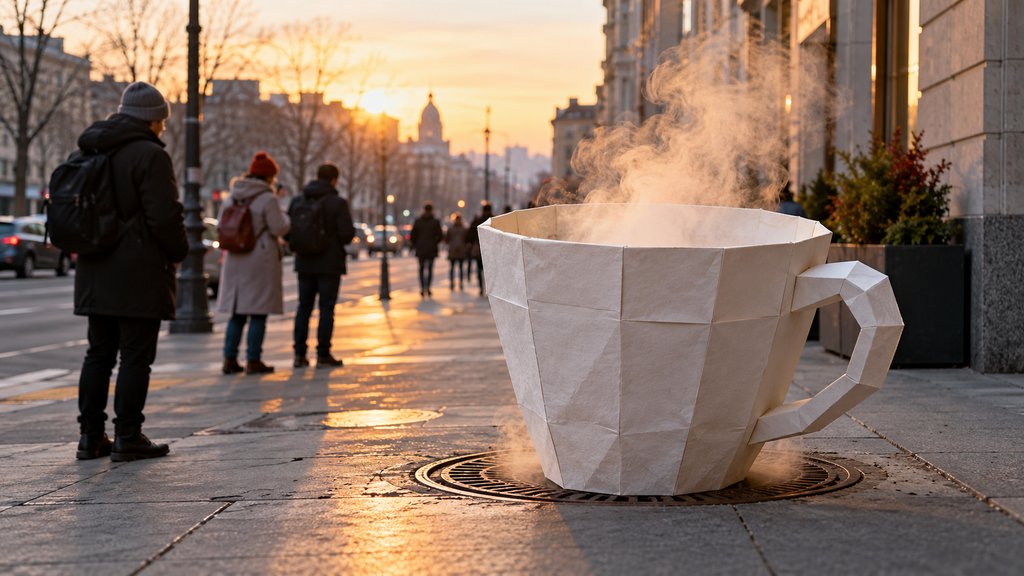
In July 2023 a short clip showed a London Underground train with enormous eyelashes being brushed by a giant mascara wand, then a bus getting the same treatment. Many viewers took it as real. It was computer-generated from start to finish, made for Maybelline. The format gained a name, faux out-of-home, usually shortened to FOOH.
Copies followed within weeks, from luxury handbags rolling through Paris to drinks bottles cruising past landmarks. Maybelline later built a physical version on a Manchester tram in 2024, turning the fake back into a real street stunt. Some critics argue FOOH is closer to a special effect than guerrilla work. It certainly costs no permit.
Ambush marketing is the cousin that lives around big sporting events. At the 2010 World Cup in South Africa, a group of 36 women in matching orange miniskirts linked to the Dutch brewer Bavaria were removed from the Netherlands match against Denmark. FIFA objected because Bavaria was not a sponsor. Few guerrilla marketing examples drew a faster official response.
What makes a famous stunt worth copying
Looking across these guerrilla marketing examples, the strongest share three features. The idea can be explained in one sentence, the setting is ordinary until the brand touches it, and the reaction is filmable. A vending machine, a statue and a luggage belt all qualify. Most failures miss the third point, or fail the safety test.
If you are thinking about a stunt of your own, the brainstorming techniques guide is a good place to start, and the viral marketing campaigns page shows how online sharing took over from the street. One question remains open after Maybelline’s computer-made train clip: does a clip that never happened still count as guerrilla?
Questions about guerrilla marketing
What is guerrilla marketing in simple terms?
Guerrilla marketing is advertising that surprises people in places they do not expect it, usually with a small budget and a big idea. Instead of buying a billboard, a brand changes something in the street, a station or online, and relies on passers-by, photos and news coverage to spread the message far beyond the original spot.
Is guerrilla marketing illegal?
It is not illegal in itself, but individual stunts can break local laws on permits, littering, vandalism, trespass or public safety. Chalk on a pavement may still need permission, and anything resembling a suspicious device invites a police response. The 2007 Boston incident ended with a $2 million payment, which shows what can go wrong.
What are the main types of guerrilla marketing?
Common types include ambient marketing, which reshapes ordinary objects such as benches or manhole covers; ambush marketing around big events a brand does not sponsor; experiential stunts that invite people to take part; street projections and art; and, more recently, faux out-of-home videos that show impossible billboards created entirely with computer graphics.
Can small businesses use guerrilla marketing ideas?
Yes, and the idea suits them because it trades money for imagination. A café can stencil a trail of footprints to its door, a bookshop can leave wrapped mystery books in a park, and a gym can put a weighted handle on a bus shelter. Check local rules first, and make sure the joke fits your brand.
What is a faux out-of-home ad?
A faux out-of-home ad, often shortened to FOOH, is a video that shows an impossible billboard or street installation made with computer graphics, then shared on social media as if it were real. Maybelline's 2023 clip of mascara brushed onto a London train is the best known case and inspired many brands to copy the format.